

GMAT Percentiles and 80th % Confusion (current percentiles included)
A detailed analysis of GMAT percentiles and why an 80th percentile Quant score isn’t necessary for admission to a top MBA program.
You’ve decided that an MBA is the right path for you. A diligent person, you make a list of your favorite MBA programs and note the median GMAT scores so you can set a proper goal. Because you’ve got your sights set on the top ten with a soft spot for the top three a 675+ score seems imperative. Fair enough. You’ve done well on standardized tests and aren’t afraid of a good challenge.
Three months later after grueling through a couple hundred hours of GMAT prep you are sitting in front of a rather schlubby looking computer taking your official GMAT. It’s challenging, especially on the Quant side. You were a bit rushed there. Verbal was a slog but there were no surprises. Data Insights was fine. A few clicks after the last question and: 675! 94th percentile! You made it!!! Or did you? You notice that you nearly failed the Quant with a percentile score in the low 60’s. What?!! How is that possible?
Damn you GMAT Quant percentiles!
Is Harvard slipping away? The short answer is: no, Harvard is not slipping away. Everything is OK. Read on for a detailed analysis of GMAT percentiles and an 80th percentile Quant score isn’t necessary for admission to a top MBA program.
A brief history of GMAT Percentiles and the mysteriously shifting 80th percentile Quant Score
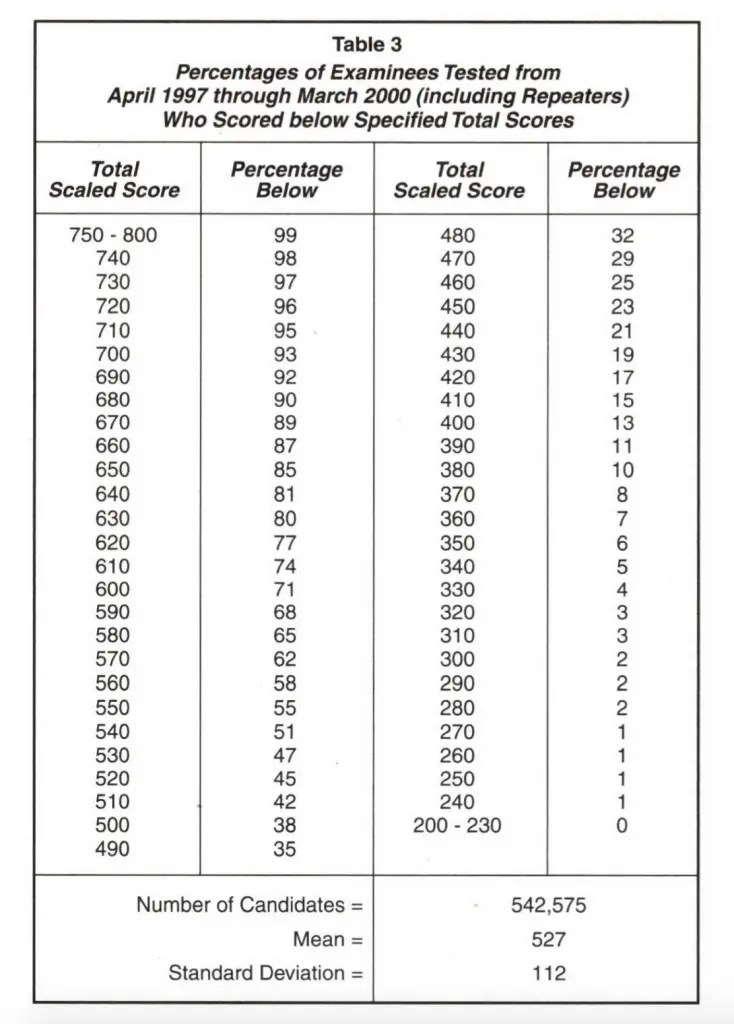
Back in 2000, an old GMAT Quant scaled score of 45 (about a 78 on the current 60-90 scale) represented the 82nd percentile (see table).
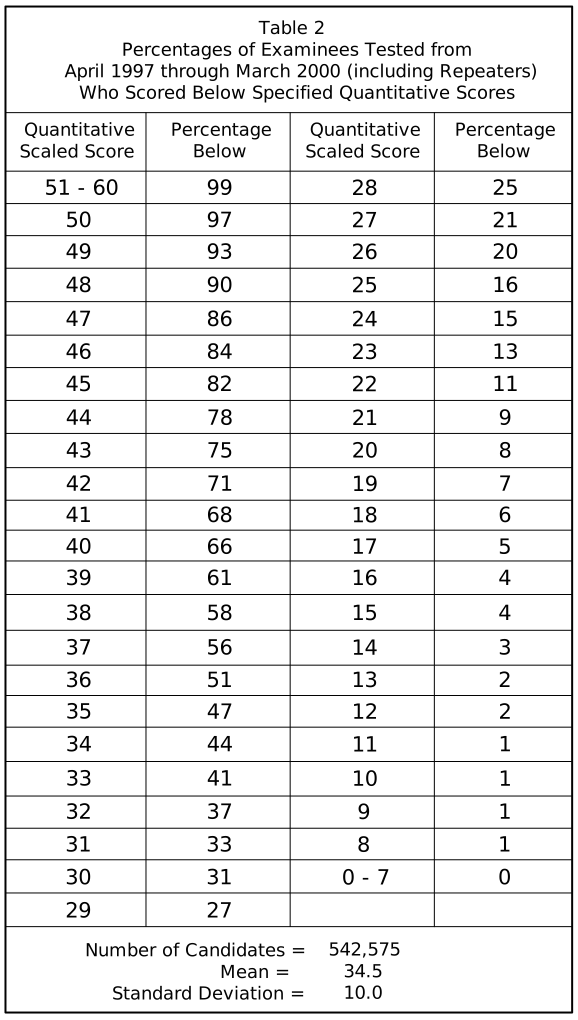
That seems to be when the quant 80th percentile really mattered. Since then, as illustrated in the accompanying tables, what was the 80th percentile dipped to the 78th, 75th, 71st, a D grade 63rd percentile, and by 2021, the old GMAT’s final years, a red flag failing F 53rd percentile. Astonishing! So, yes, the GMAT quant 80th percentile does matter. But not the 2021 (or 2026) 80th percentile, the 2000 one:).
Why have GMAT score percentiles changed?
The simple answer is that more people are getting perfect or near perfect scores. In fact, by the end of the old GMAT there was no 99th percentile quant percentile. You could only get to the 97th percentile. A full three percent of GMAT test takers were ringing up a perfect quant score. The current GMAT reset the scale (Quant is now scored 60-90) but the crowding at the top is the same: a perfect 90 sits at the top of the chart and the 89 right below it is already down at the 97th percentile.
Why are people doing better? I’d like to think that Atlantic GMAT is the sole reason but the facts point elsewhere. It has to do with the shifting demographics of GMAT test takers. People from countries that tend to provide a better math education than is provided in the US have been taking the GMAT in much greater numbers.
These folks are making the GMAT percentiles (on the Quant side) much more competitive. Here is a more in depth discussion on changing GMAT Quant percentiles and how Americans are lagging. One interesting little tidbit from the article, “according to GMAC, Asia students spend an average of 151 hours in test preparation; U.S. students average 64 hours.”
Here you can see a Quant scaled score of 45 drop to the 78th percentile,
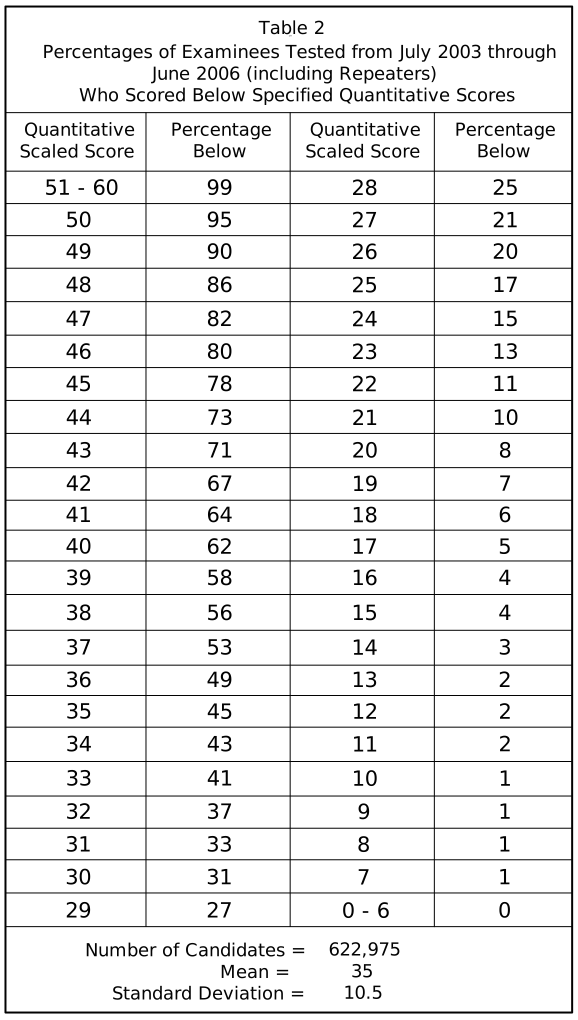
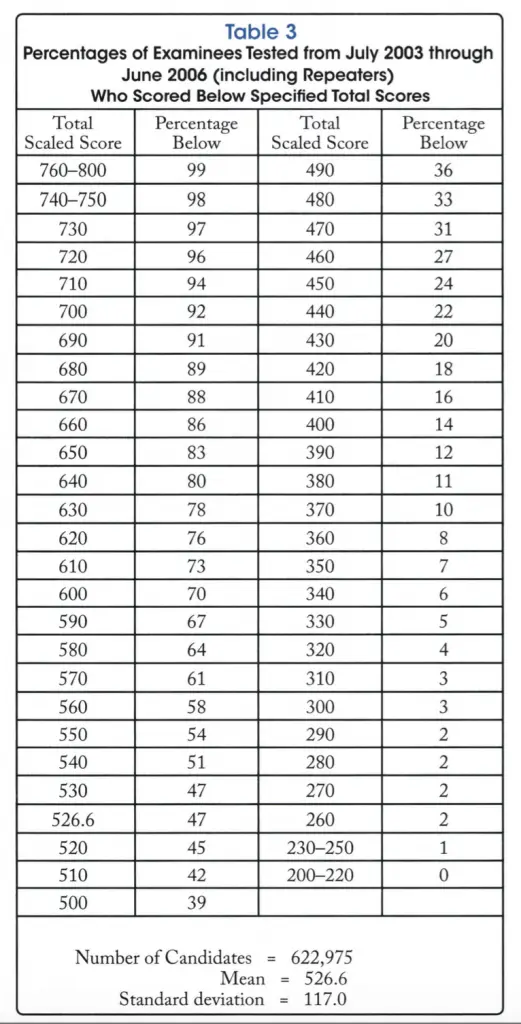
and then to the 75th!
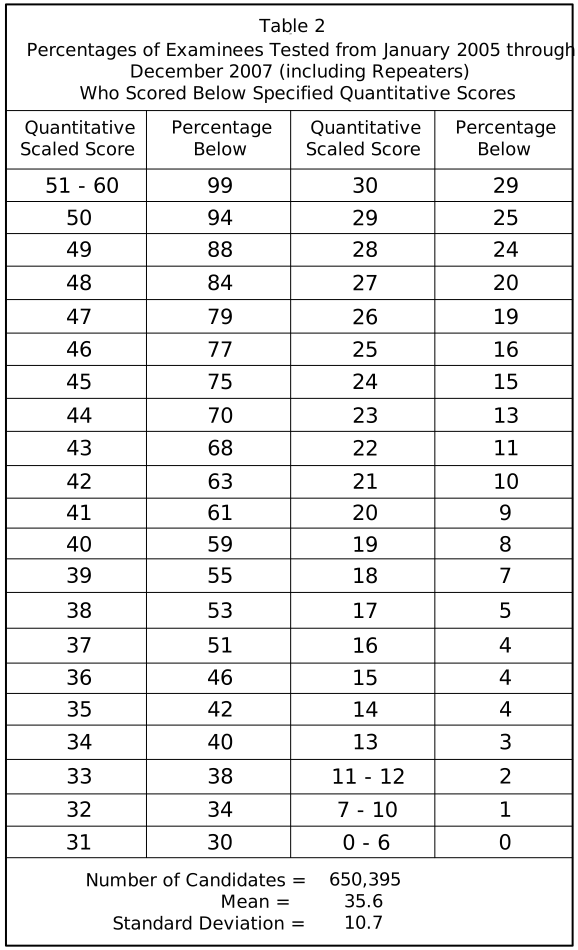
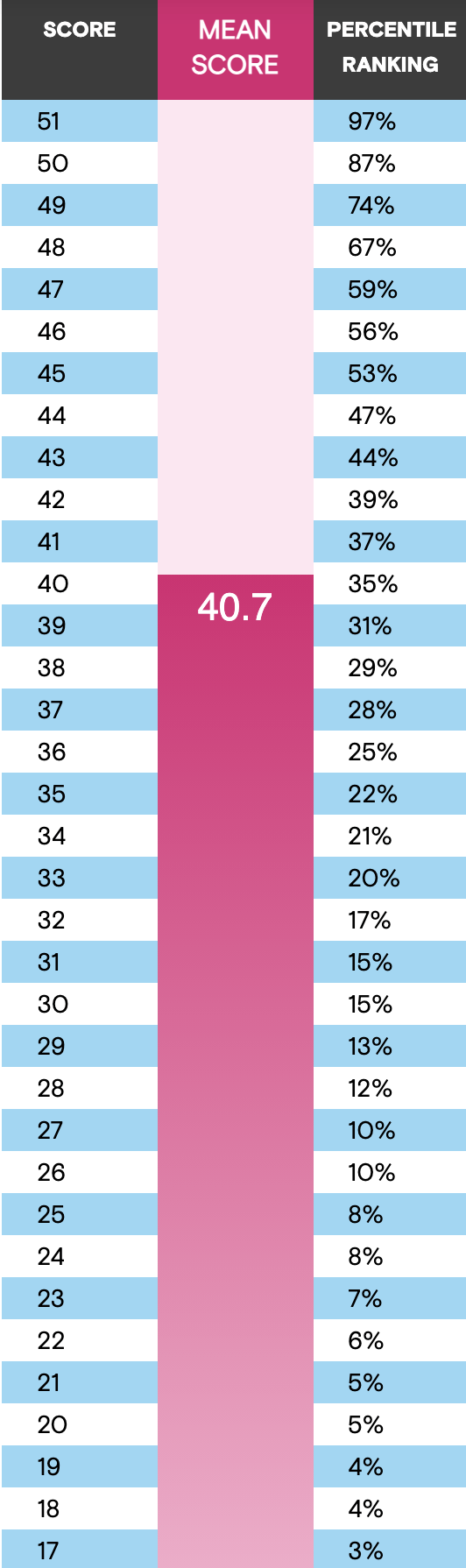
Here the Q45 plummets to the 71st percentile
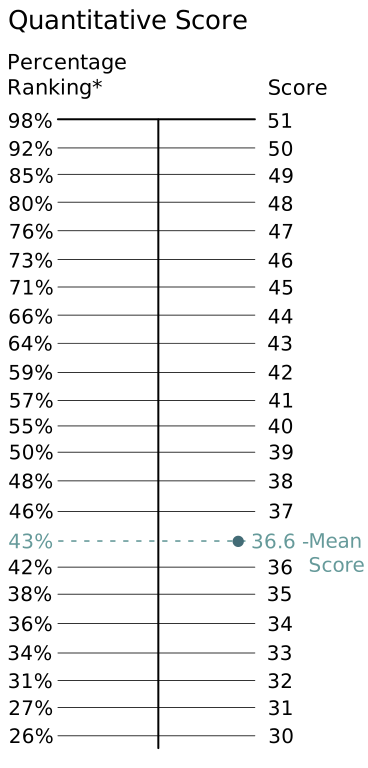
the sad looking 63rd percentile in 2016.
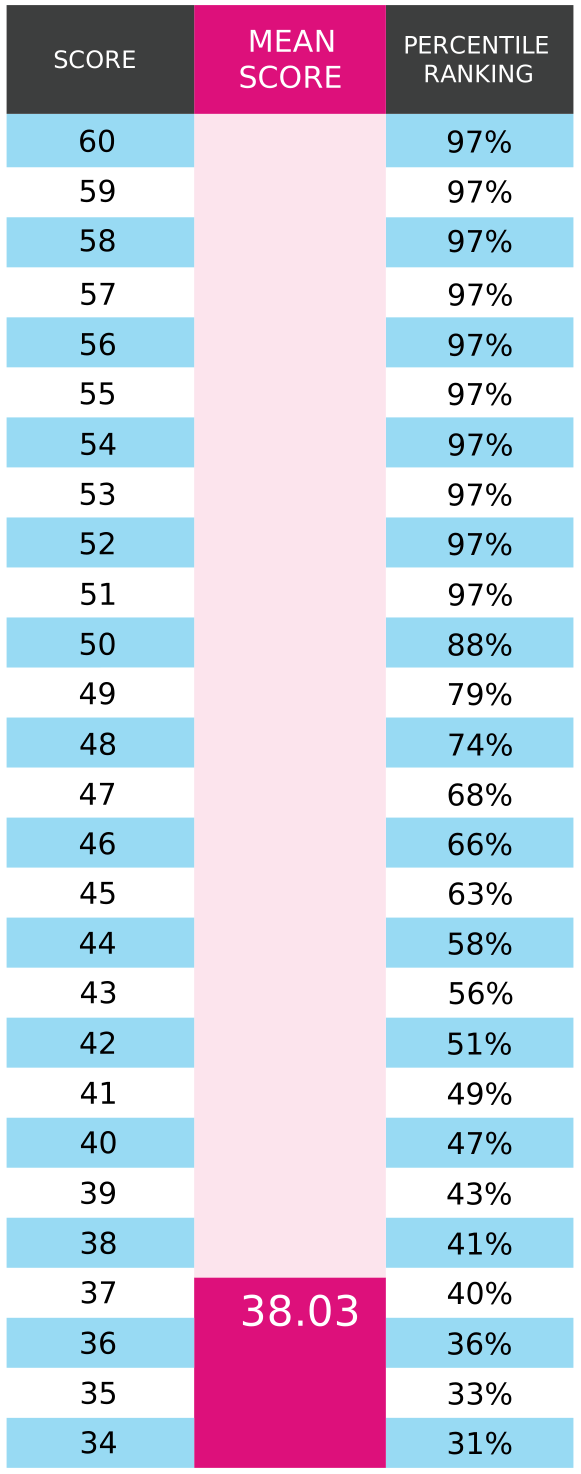
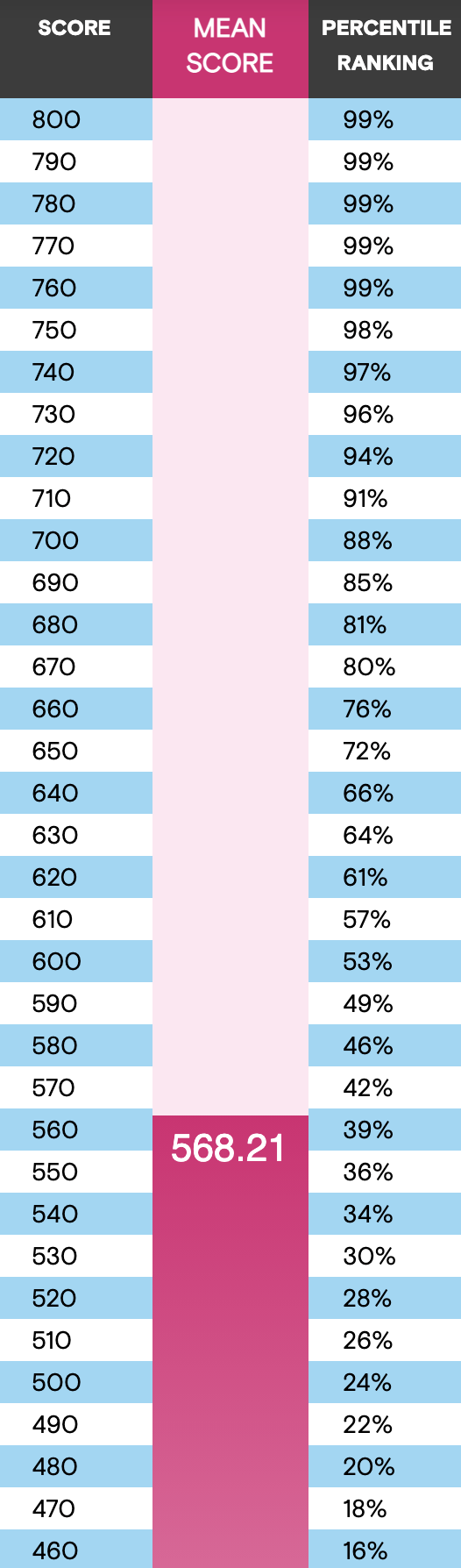
The last old GMAT Quant Percentiles (2021) based on scores from January 2018 – December 2020 (a Quant 45, a Harvard quant score, down to the 53rd percentile)
Here’s all of those old GMAT percentiles consolidated into one big GMAT quant percentiles mega chart following a 45 quant score from the 80th percentile down to the 55th percentile:
| Quant Scaled Score | GMAT Percentiles 1997-2000 | GMAT Percentiles 2003-2006 | GMAT Percentiles 2005-2007 | GMAT Percentiles 2006-2009 | GMAT Percentiles 2013-2016 | GMAT Percentiles 2015-2017 |
|---|---|---|---|---|---|---|
| 51-60 | 99 | 99 | 99 | 98 | 97 | 96 |
| 50 | 97 | 95 | 94 | 92 | 88 | 85 |
| 49 | 93 | 90 | 88 | 85 | 79 | 74 |
| 48 | 90 | 86 | 84 | 80 | 74 | 67 |
| 47 | 86 | 82 | 79 | 76 | 68 | 61 |
| 46 | 84 | 80 | 77 | 73 | 66 | 58 |
| 45 | 82 | 78 | 75 | 71 | 63 | 55 |
| 44 | 78 | 73 | 70 | 66 | 58 | 50 |
| 43 | 75 | 71 | 68 | 64 | 56 | 47 |
| 42 | 71 | 67 | 63 | 59 | 51 | 43 |
| 41 | 68 | 64 | 61 | 57 | 49 | 41 |
| 40 | 66 | 62 | 59 | 55 | 47 | 39 |
| 39 | 61 | 58 | 55 | 50 | 43 | 35 |
| 38 | 58 | 56 | 53 | 48 | 41 | 33 |
| 37 | 56 | 53 | 51 | 46 | 40 | 32 |
| 36 | 51 | 49 | 46 | 43 | 36 | 29 |
| 35 | 47 | 45 | 42 | 42 | 33 | 26 |
| 34 | 44 | 43 | 40 | 38 | 31 | 24 |
| 33 | 41 | 41 | 38 | 36 | 23 | |
| 32 | 37 | 37 | 34 | 34 | 21 | |
| 31 | 33 | 33 | 30 | 31 | 18 | |
| 30 | 31 | 31 | 29 | 27 | 17 |
GMAT percentiles vs GMAT scaled scores and Why a 53rd percentile GMAT Score is OK
Part of why achieving an 80th percentile GMAT Quant score doesn’t matter is that a GMAT score percentile only measures relative ability. It is the scaled score that measures absolute ability. So a Quant 45 from 2021 was the same as a Quant 45 from 1997, and a Quant 78 today will be the same Quant 78 in five years no matter what the percentile next to it says. That’s why the sub-section scaled score is more meaningful than the percentile score. It is a measure of your skills. And, people who have been doing admissions for years recognize that.
The percentiles may change, but the scaled scores still represent a known quantity in terms of ability. Here’s an article straight from the ‘horses mouth’ (GMAC) discussing GMAT scaled scores and GMAT scoring. And here’s another GMAC paper on scaled scores: Where do scaled scores come from?
With a Quant 78 you have the skills to face the rigor of an MBA even if your percentile seems pathetic. Do you need to have a near perfect quant score to do well in an MBA program? Nope. Think about it like this: let’s say there’s a certain amount of weight that you have to be able to lift in order to become a fireman in New York City. Let’s say that’s 200 pounds. Does it make you a more qualified fireman if you can lift 400 pounds? Not necessarily. Once you’ve crossed the 200 pound threshold, there are probably other skills that are more important than lifting weight. So it is with the GMAT. At some percentile (well below the 80th percentile) your Quant skills are proven and so your total GMAT score, combined GMAT score percentile, and the rest of your application become more important.
A few recent examples of real people (former NYC GMAT tutoring students) with sub 80th percentile GMAT Quant scores admitted to top ten schools
Harvard (HBS)
Competitive Bracket – GMAT Score: 665 Breakdown: Q79 V86 DI84 (2015)
Semi-Competitive Bracket – GMAT Score: 615 Breakdown: Q77 V84 DI80 (2015)
Columbia
Competitive Bracket – GMAT Score: 675 Breakdown: Q79 V88 DI83 (2014)
Less Competitive Bracket – GMAT Score: 575 Breakdown: Q73 V84 DI78 (2014)
Tuck
Semi-Competitive Bracket – GMAT Score: 665 Breakdown: Q79 V86 DI84 (2015)
Less Competitive Bracket – GMAT Score: 645 Breakdown: Q78 V86 DI82 (2015)
When does an imbalance in GMAT percentiles warrant a retake?
This advice really depends on who you are (as seen in the examples above). If you have a proven math background, a 675+ score, but a super low quant percentile, you might be totally fine. If you have a desirable background/story that a particular school is looking for, again, a lower Quant score could be A-OK.
Here are some rough and ready guidelines for when to consider a retake (assuming you are applying to the “crème de la crème” MBA programs)
- Most people with a Quant score below a 78 gunning for the top two or three MBA programs.
- Most people who are in a competitive bracket with a Quant score below a 78.
- Any applicant applying to top ten-ish schools with a quant score below a 75.
Have you had a different experience with your admissions process? Follow up with any questions or comments!
GMAT Percentiles FAQ
What is the GMAT out of?
The GMAT is out of 805. With 205 being the lowest possible GMAT total score. The GMAT quant scaled score is out of 90. The verbal and Data Insights scaled scores are also out of 90. All three sections run from 60 to 90 and count equally toward the total.
gmat score distribution
What is the GMAT Score Range?
The GMAT score range is from 205-805 for the total score and from 60-90 for the Quant, Verbal, and DI subsection scores. The total score (out of 805) is the one the counts most for MBA admission followed by your quant sub section score.
What is the GMAT average score?
The GMAT average score changes from year to year. Here are average GMAT scores for the last bunch of reported periods on the old GMAT:
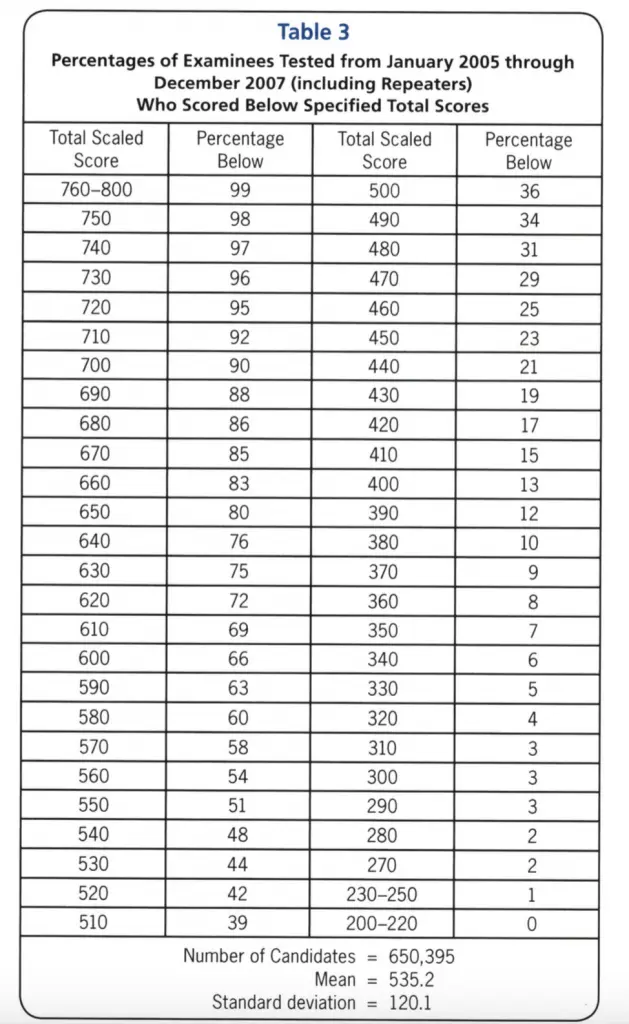
In the year 2000 the average GMAT score was a 527
2003-2006 the average GMAT score was a 526
2005-2007 the average GMAT score jumped to 535
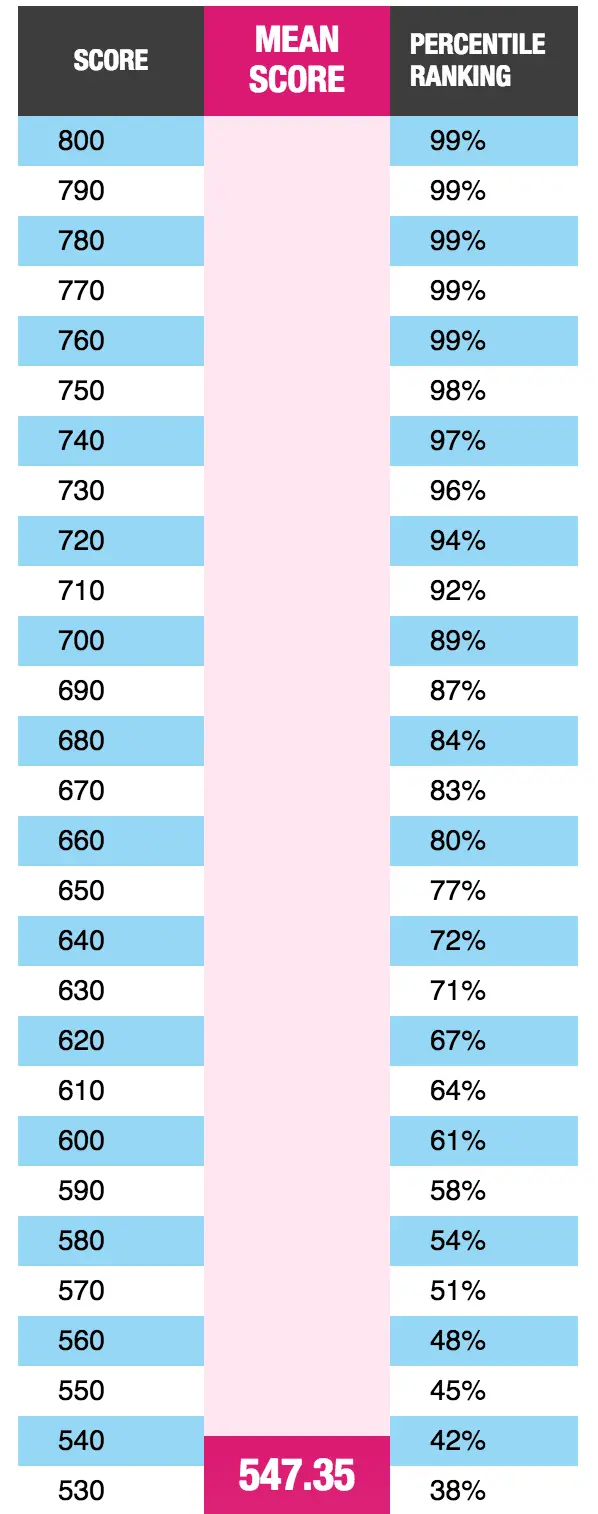
In 2009 the GMAT average score leapt again to 542
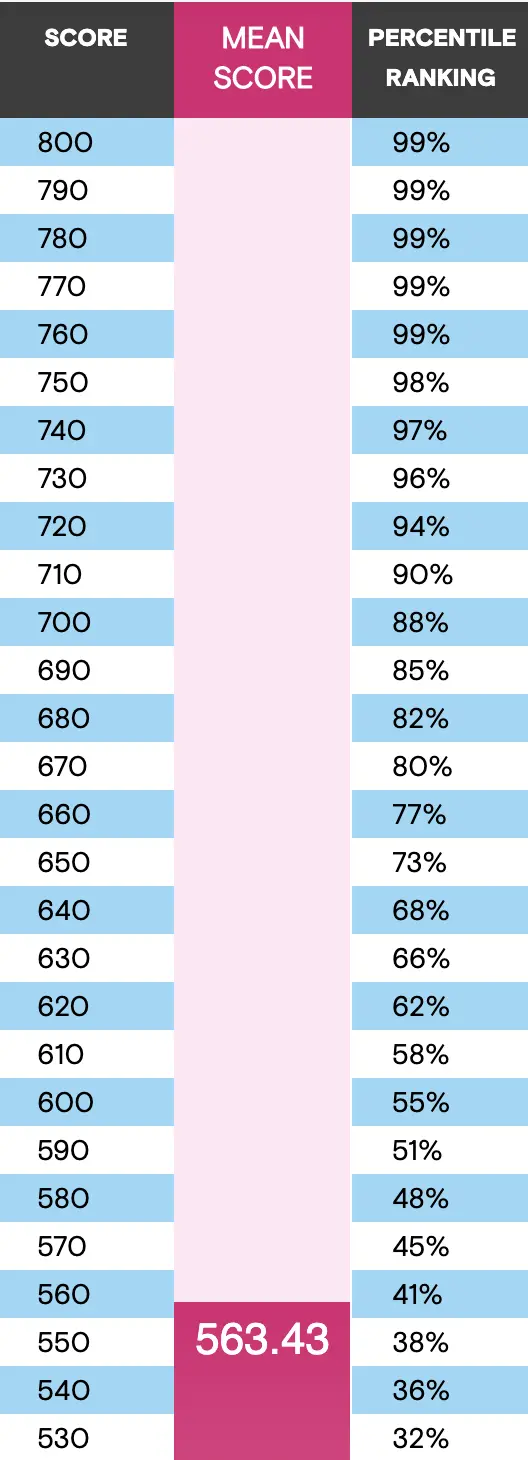
The old GMAT finished with an average score of 547
The current GMAT is on a new scale (205-805) and the average total score is a 555
What are the average GMAT scores by school?
We don’t have averages scores but we do have medians. Here are the top 16 median GMAT scores by school along with links to their most recent class profile pages:
Wharton (University of Pennsylvania) 685
Harvard Business School (HBS) 685
Stanford GSB 685
Booth (Chicago) 685
Sloan (MIT) 685
Columbia (CBS) 685
Tuck (Dartmouth) 675
Ross (Michigan) 675
SOM (Yale) 675
Darden (UVA) 675
Fuqua (Duke) 645
Anderson (UCLA) 675
Stern (NYU) 675
Are GMAT percentiles different for the online GMAT?
No. GMAT online is the same as GMAT in person and the subsection, total, and percentile scores are the same.
What are the current GMAT percentiles?
Here are the top GMAT total score percentiles (GMAC’s current table, 2021-2026 data)
805 100%
795 100%
785 100%
775 100%
765 100%
745 100% Everything from a 745 up rounds to the 100th percentile. The scale is new but the shape is the same as always: the top few percent of test takers are packed into a narrow band of scores.
735 99%
725 99%
715 99%
705 98%
695 97%
685 95%
675 94%
665 91%
655 90%
645 86%
635 81%
Here are the top GMAT Quant Percentiles
90 100% A perfect Quant score is back at the very top of the chart, but only for the moment. An 89 is already down at the 97th percentile.
89 97%
88 95%
87 93%
86 91%
85 88%
84 85%
83 80%
82 75%
81 70%
80 64%
79 57%
78 50% This is where the old Quant 45 lands, the score that was the 80th percentile in the year 2000 and is what the 80/80 admissions rule seems to be based on.
Here are the top Verbal Percentiles
90 100%
89 99%
88 98%
87 97% Notice how much more slowly the verbal percentiles fall off at the top than the quant ones do. That means that as a verbal superstar you have a slight advantage over a quant superstar (verbal scoring is finer. The top of the verbal is much more competitive)
86 96%
85 93%
84 87%
83 81%
82 73%
81 64%
80 54%
79 46%
78 38%
77 30%
76 23%
Here are the top Data Insights Percentiles
90 100%
88 99%
85 98%
84 97%
83 95%
82 93%
81 88%
80 83%
79 76%
78 69%
77 61%
76 52%
75 46%
GMAT Percentile Grids
Just for fun, here are the old GMAT percentile charts for composite scores over the past 15 years or so starting from the year 2000 all the way to the last old GMAT percentiles:
Old GMAT Percentiles January 2018 – December 2020